




By DayakDaily Team
KUCHING, June 28: Talks suggesting that Sarawak could undergo a redelineation exercise remain, for now, purely speculative, as it is also possible that other pressing matters—such as the Malaysia Agreement 1963 (MA63) or Sarawak’s rights over oil and gas resources—may take priority.
In a statement, Sarawak United Peoples’ Party (SUPP) Stakan chairman Dato Sim Kiang Chiok said that the redelineation of State constituencies can be tabled and decided in the Sarawak Legislative Assembly (DUS), while parliamentary constituencies fall under federal jurisdiction and require action at the national level.
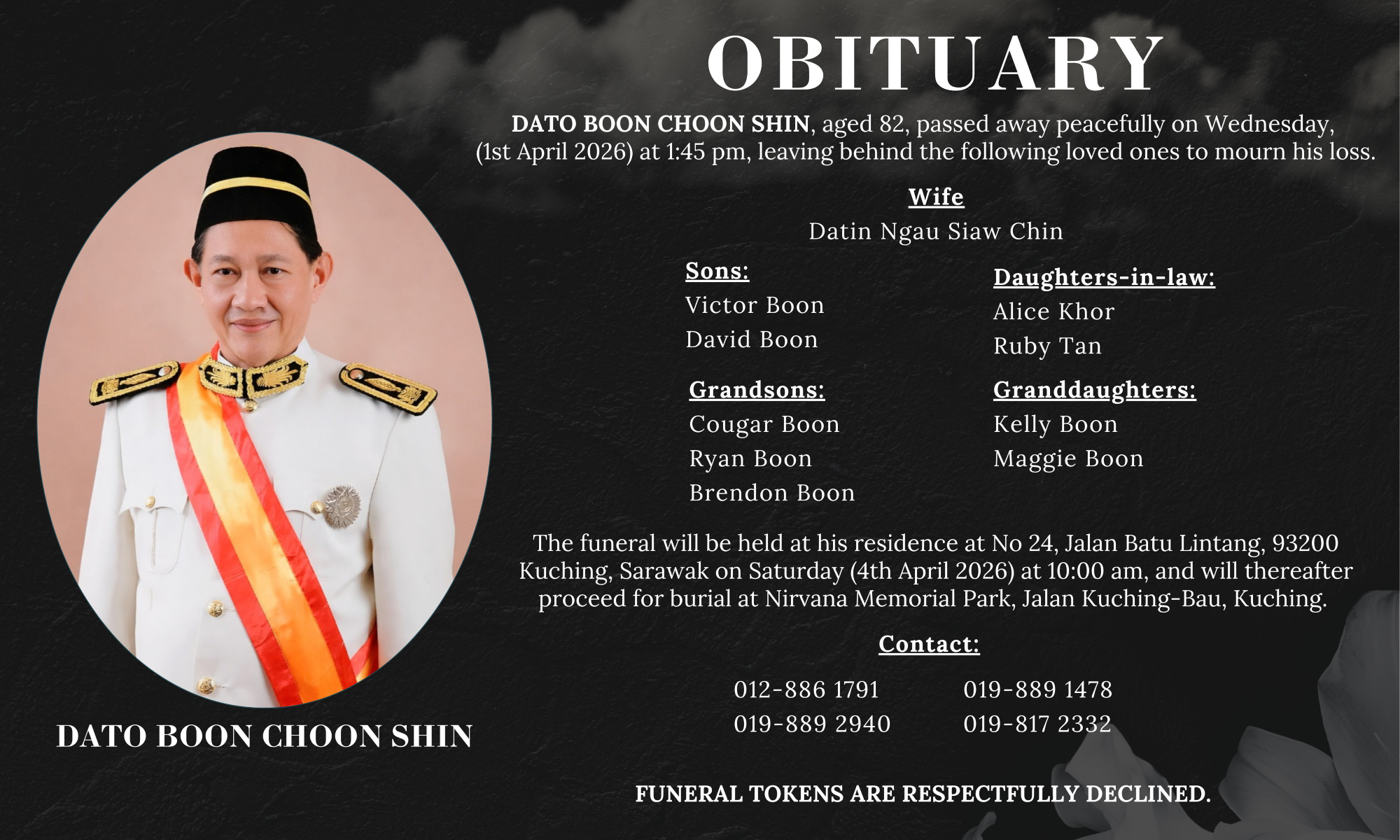
“While the conversation is timely, it is essential that Sarawakians remain informed about what can and cannot be decided within our State legislative processes,” he said.
Regarding the timing of a redelineation, he stated that laws stipulate that redelineation exercises must be carried out within a specific time frame to ensure fair and up-to-date representation.
Therefore, he said, if the timeline under the Federal Constitution is approaching and also taking into account the adjustment for one-third of parliamentary seats for Sarawak and Sabah, it would be both necessary and timely to conduct a redelineation to reflect current realities on the ground and the agreement in MA63.
“When asked about how many new State seats would make sense for Sarawak, I believe that the Election Commission (EC) will propose new seats based on established criteria, including population size, the number of voters, and geographical considerations. These objective measures will help ensure fair and balanced representation across our vast State.
“However, it is critical to recognise that population numbers alone should not be the only factor guiding redelineation in Sarawak. Our State’s unique geography—marked by expansive rural areas with low population density—means that many communities are spread far apart, and infrastructure in some of these areas remains underdeveloped.
“Redrawing boundaries solely based on population without considering physical size and accessibility would place an undue burden on elected representatives, who would struggle to effectively serve constituents across vast, sparsely populated territories,” he said.
As for how the potential new boundaries could impact the next election, Sim believes that more constituencies will bring greater representation for Sarawakians, as having more elected representatives will enable them to address the unique challenges faced by both urban and rural communities better.
“In conclusion, while the prospect of a redelineation exercise has generated understandable interest, it is vital that we approach this issue with clarity, patience, and a firm commitment to fair representation.
“I urge all stakeholders to stay engaged and informed as developments unfold, so that any decision made truly serves the best interests of our beloved Sarawak,” he said.
On June 20, an official notice issued by Speaker Tan Sri Datuk Amar Mohamad Asfia Awang Nasar stated that a special one-day sitting will be convened on July 7, without providing a reason for the meeting, which is being called under Meeting Order 8(3).
Following that, on June 25, Asfia said that no Bills have been submitted so far for the special sitting.
However, he did not rule out the possibility that the redelineation of State and parliamentary constituencies could be tabled. — DayakDaily